Christmas Trees: Strategic Vector Patterns for Purpose-Driven Design
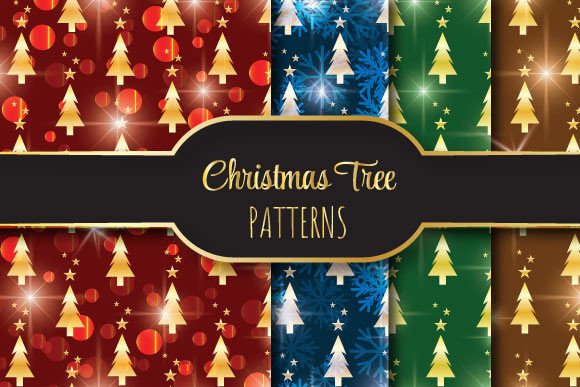
Christmas Trees isn’t just a seasonal motif—it’s a precisely engineered, seamlessly repeating vector pattern system built for professional use. Each file is delivered at 12 × 12 inches (3600 × 3600 pixels, 300 dpi), in EPS 10 format, with four high-fidelity JPEG variants included in the ZIP archive. This isn’t decorative filler. It’s a scalable, production-ready asset designed to integrate thoughtfully into branding systems, print workflows, digital interfaces, and physical product development—where consistency, clarity, and control matter.
Why Christmas Trees Fits Into Real-World Strategy
When you’re selecting design assets—not just for aesthetics but for function—you’re making decisions that ripple across timelines, teams, and touchpoints. Christmas Trees delivers predictable repetition without visual fatigue: its geometry is balanced, its scale is intentional, and its vector foundation ensures flawless output from business cards to billboard wraps. That reliability supports long-term brand coherence, especially when consistency must be maintained across freelancers, agencies, or internal marketing teams who may not share the same design tools or experience level.
For entrepreneurs launching holiday campaigns, educators building classroom resources, or publishers developing seasonal editorial layouts, Christmas Trees offers a rare combination: creative flexibility without technical compromise. You’re not choosing between “pretty” and “practical.” You’re choosing an asset that holds up under scrutiny—whether viewed on a retina screen, printed on textured paper, or scaled for packaging die-cuts.
Use Cases That Go Beyond Decoration
Christmas Trees works best when anchored to a specific objective—not as background noise, but as structural support:
- Brand extension: Apply the pattern subtly in email headers, invoice footers, or unboxing materials to reinforce seasonal identity without overwhelming core messaging.
- Print production efficiency: Because it’s seamless and vector-based, Christmas Trees eliminates manual tiling, reduces rasterization errors, and shortens prepress review cycles—critical when tight deadlines demand zero rework.
- Educational resource design: Teachers and curriculum developers use the pattern as a non-distracting border or section divider in worksheets, slide decks, or interactive PDFs—adding thematic resonance while preserving readability and cognitive load balance.
- Product surface design: Small-batch makers apply Christmas Trees to fabric swatches, ceramic decals, or gift wrap templates knowing the repeat aligns cleanly across seams and folds—no guesswork, no misalignment.
How to Approach Christmas Trees Intentionally
Start by asking: What outcome do I need this pattern to support? If the answer is “to look festive,” pause. That’s a starting point—not a strategy. Instead, map the pattern to a measurable need: improving recognition of a limited-time offer, reinforcing a brand’s commitment to craftsmanship, or creating tactile continuity across a multi-channel campaign.
Then consider context. A 300 dpi, 3600-pixel square gives you resolution headroom—but only if your final output demands it. For web banners or social posts, the included JPEGs may suffice. For letterpress stationery or foil-stamped packaging, the EPS file is essential. Don’t default to the largest asset; choose the format that matches your production path and quality threshold.
Also assess scalability beyond the immediate project. If you plan to reuse Christmas Trees across multiple years—or adapt it into monochrome, duotone, or spot-color versions—verify that the vector construction allows clean editing. The EPS 10 format does. Earlier EPS versions sometimes embed raster elements or flatten layers; this one maintains editable paths and color groups, giving you room to adjust without rebuilding.
Risks of Using Christmas Trees Without Clarity
The biggest risk isn’t technical—it’s strategic drift. Dropping Christmas Trees into a layout because it’s “available” or “on-brand” can dilute focus, confuse hierarchy, or unintentionally signal seasonal limitation where permanence is needed (e.g., using it in a company’s year-round style guide). Patterns communicate tone, timing, and attention to detail—and audiences register those cues faster than text.
Another common misstep: assuming seamless repetition guarantees visual harmony. A technically perfect tile can still clash with typography, photography, or adjacent UI elements if contrast ratios, color temperature, or negative space aren’t considered holistically. Always test Christmas Trees against your full palette and real content—not isolated mockups.
Finally, avoid over-indexing on novelty. Seasonal patterns carry cultural weight. Use Christmas Trees with awareness—not as shorthand for “holiday cheer,” but as a deliberate tool for signaling warmth, tradition, or shared ritual in ways that feel authentic to your audience’s expectations and your organization’s voice.
Planning Tips for Long-Term Value
Think beyond December. Christmas Trees includes subtle variations in line weight, density, and spacing—not obvious at first glance, but meaningful when repurposed. A lighter version works for watermarking digital assets; a denser iteration adds texture to packaging backgrounds. Save each JPEG variant with descriptive filenames (e.g., christmas-trees-light-300dpi.jpg) so future you—or your team—can retrieve the right version without trial and error.
If you’re managing multiple seasonal assets, treat Christmas Trees as part of a modular system. Store it alongside complementary elements—like coordinating typography pairings, neutral-toned photo overlays, or accessible color palettes—that share the same production standards (300 dpi, vector source, consistent naming). That modularity pays dividends during campaign planning, reducing decision fatigue and accelerating execution.
And remember: licensing matters. This asset is delivered as a single-use, royalty-free download—but verify whether redistribution (e.g., within a template sold to clients) or derivative creation (e.g., modifying the pattern for resale) falls within permitted use. When in doubt, consult the license terms before embedding Christmas Trees into products you distribute commercially.
Decision-Making Guidance for Professionals
You don’t need Christmas Trees for every project. But when you do need it, you need it to perform without compromise. Ask these questions before committing:
- Does this pattern serve a functional role—or is it purely ornamental?
- Will its technical specs (EPS 10, 300 dpi, 3600 px) match my output requirements—or introduce unnecessary complexity?
- Can I maintain visual control across formats (print, web, physical product) using the provided files?
- Does its tone align with how I want my audience to feel—not just during the holidays, but in their broader experience of my brand or work?
- Have I accounted for accessibility? Test contrast against text overlays; ensure pattern density doesn’t interfere with legibility at small sizes.
When used with intention, Christmas Trees becomes more than decoration. It becomes infrastructure—a quiet, reliable layer that supports clarity, reinforces identity, and scales with your goals. That’s not seasonal utility. That’s strategic design discipline.
Final Note on Execution
Don’t wait until November to evaluate Christmas Trees. Review it now—alongside your current templates, brand guidelines, and upcoming Q4 initiatives. See where it fits, where it doesn’t, and where it might evolve. The most effective use of assets like this isn’t reactive. It’s planned, tested, and aligned—not with trends, but with outcomes.