Christmas Buffalo Plaid: A Practical Guide to Using 20 Rustic Patterns in Real Design Work
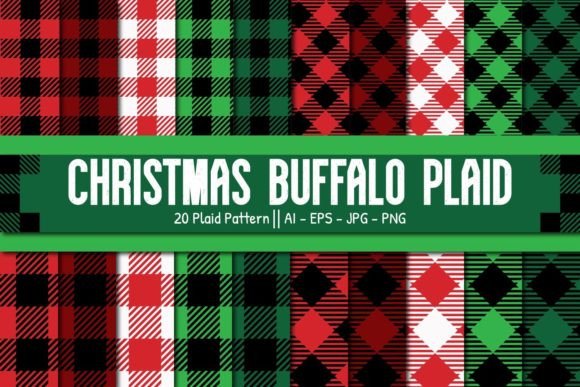
Christmas Buffalo Plaid refers to a curated collection of 20 classic plaid patterns rooted in traditional buffalo check aesthetics—bold, balanced, and distinctly seasonal. Unlike generic holiday graphics or overly stylized digital prints, this set emphasizes authenticity in proportion, contrast, and scale. Each pattern features the hallmark red-and-black (or complementary seasonal palettes like forest green, navy, or cream) checkerboard structure with consistent line weight and spacing—designed for visual cohesion across applications. What sets this collection apart is its intentional versatility: it’s not just decorative; it’s engineered for function across multiple production methods and software environments.
How This Collection Compares to Other Plaid Resources
Many designers encounter plaid pattern packs that fall into one of two categories: highly stylized vector repeats with exaggerated textures (often optimized for social media or web use), or scanned fabric swatches converted to low-resolution JPEGs—unsuitable for print or sublimation. Christmas Buffalo Plaid avoids both extremes. The inclusion of AI and EPS files means precise scalability without distortion, while the 300 dpi JPG and transparent-background PNGs support both high-fidelity physical output and layered digital compositing. That dual-format readiness makes it more adaptable than single-format alternatives—especially when working across platforms like Cricut Design Space (which reads SVG well but benefits from clean vector imports), Silhouette Studio (which handles EPS via conversion), or Canva (where high-res PNGs with transparency simplify background removal).
Compared to free pattern libraries or open-source tile sets, this collection offers consistency in color mode (CMYK- and RGB-ready), grid alignment, and repeat logic. Free resources often require manual cleanup—adjusting bleed, correcting misaligned tiles, or rebuilding transparency layers. With Christmas Buffalo Plaid, those steps are pre-optimized. That doesn’t mean it replaces custom pattern creation for brand-specific needs—but it significantly reduces setup time for projects where rustic charm matters more than proprietary uniqueness.
Strengths Across Common Use Cases
The ZIP file delivers immediate utility in several practical contexts:
- Sublimation printing: The 300 dpi JPG and PNG files retain clarity on ceramic tumblers, polyester pillows, and metal signs. Because the patterns are built on even grids, they wrap predictably around curved surfaces without visible seam distortion—unlike irregularly spaced or hand-drawn plaids that may stretch unevenly.
- Wallpaper and large-format decoration: EPS and AI files scale cleanly to wall-sized dimensions. Designers report fewer rendering issues in Adobe Illustrator or CorelDRAW when applying these patterns as fills versus raster-based alternatives, especially when layering over gradients or photo backgrounds.
- Book covers and printed stationery: The CMYK-ready files integrate smoothly into InDesign workflows. Unlike RGB-only assets that shift during PDF export, these maintain predictable color behavior—critical for holiday-themed greeting cards or planner inserts where red tones must remain rich and consistent.
- Digital backgrounds and UI elements: Transparent PNGs allow direct overlay on websites, presentation slides, or email headers without clipping masks or background removal tools. This saves time compared to editing non-transparent JPGs for layered layouts.
Tradeoffs and Realistic Limitations
No pattern pack is universally optimal—and Christmas Buffalo Plaid reflects thoughtful constraints rather than oversold flexibility. It does not include SVG files, which limits native compatibility with some web-first tools (though SVG can be exported from AI or Inkscape if needed). It also doesn’t offer editable color variants per pattern—so swapping red for burgundy requires manual recoloring in your vector editor. That’s a tradeoff for simplicity: 20 clean, ready-to-use patterns instead of 60 versions with minor hue shifts.
Another consideration is stylistic scope. While “buffalo plaid” evokes farmhouse, cabincore, and vintage Americana, it sits outside minimalist, Scandinavian, or modern geometric design languages. If your project calls for subtlety—think thin-line gingham or monochrome tonal checks—this collection’s bold contrast may overpower rather than complement. Similarly, for children’s products or playful branding, the traditional red/black pairing might feel too mature without adaptation (though the included cream and green options help broaden age neutrality).
When Christmas Buffalo Plaid Fits—and When It Doesn’t
This collection excels when you need reliable, production-ready plaid quickly—particularly for seasonal merchandise, DIY home decor, or small-batch printing. For example, a maker producing holiday mugs on a sublimation press benefits from the consistent 300 dpi resolution and seamless tiling: no guesswork about how the pattern aligns at the handle seam. Likewise, an interior designer sourcing wallpaper for a client’s cozy reading nook gains confidence knowing each pattern scales evenly across varying wall heights without pixelation or repeat gaps.
It’s less ideal when customization depth is essential. If you’re developing a signature textile line requiring proprietary weave simulation, custom thread counts, or Pantone-matched spot colors, starting from scratch—or licensing a specialized textile CAD library—would provide greater control. Similarly, for motion graphics or animated backgrounds, static pattern files require additional effort to convert into looping tile animations—something dynamic pattern generators handle more natively.
Software Compatibility: What Works Smoothly (and What Needs a Small Adjustment)
The file formats align closely with industry-standard vector and raster workflows:
- Adobe Illustrator: AI and EPS files open directly with full editability—stroke weights, swatches, and pattern definitions remain intact. You can easily isolate colors, adjust spacing, or reassign swatches using Global Colors.
- CorelDRAW: EPS imports reliably, though newer versions may prompt minor font or effect translation notes (none are embedded, so no risk of missing assets). Pattern fills apply cleanly to shapes and text outlines.
- Inkscape: EPS support is functional but may require converting to PDF first for best results; AI files aren’t natively readable, but SVG exports from Illustrator preserve fidelity well.
- Photo editors (Photoshop, Affinity Photo): PNGs with transparency drop in without background cleanup. JPGs work for flat-color applications but lack layer flexibility.
Note: None of the files contain embedded fonts, raster effects, or linked assets—reducing compatibility hiccups across versions or operating systems.
Making the Call: Is This the Right Resource for Your Next Project?
Ask yourself three questions before choosing Christmas Buffalo Plaid:
- Is consistency across formats a priority? If you’re moving between print proofs, web mockups, and physical samples—and need the same pattern to behave predictably in each—you’ll value the cross-platform file suite.
- Do you prioritize speed over deep customization? If adapting patterns manually (recoloring, rescaling, retiling) would delay your timeline more than the cost of the pack justifies, this collection shortens the path from concept to output.
- Does your aesthetic align with rustic, warm, and tactile visual language? Not every holiday theme benefits from buffalo plaid’s grounded, slightly weathered presence. But if your goal is comfort, nostalgia, or handmade authenticity—not sleek futurism or delicate elegance—then the patterns reinforce rather than contradict your intent.
For designers weighing options, Christmas Buffalo Plaid occupies a pragmatic middle ground: more capable than basic free downloads, less involved than building from scratch, and more focused than broad holiday asset bundles. It serves as a dependable foundation—not a final answer, but a well-considered starting point for projects where texture, tradition, and technical reliability all matter.