Seamless Blue Digital Paper: A Practical Guide for Designers and Crafters
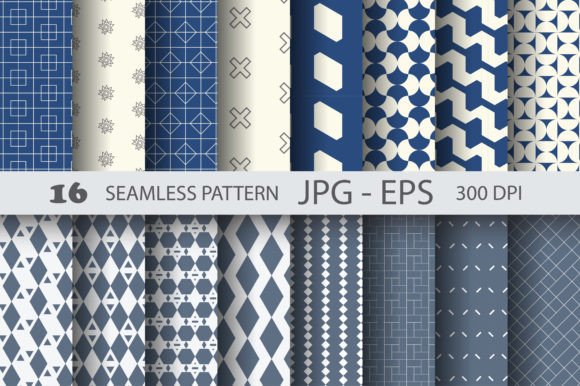
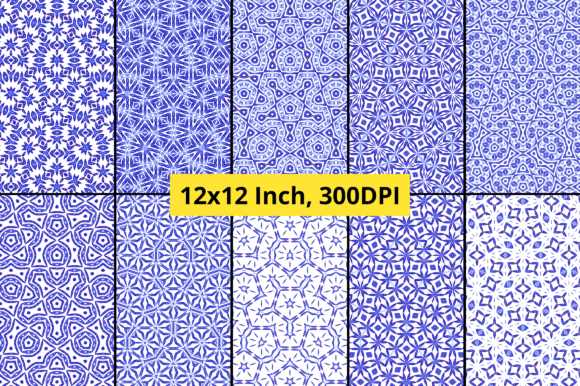
Seamless Blue Digital Paper refers to a collection of high-resolution, tileable digital background files—specifically, a set of 10 distinct blue-themed patterns—each sized at 12 x 12 inches (3600 x 3600 pixels) and delivered at 300 DPI in JPG format. Unlike standard stock textures or generic blue gradients, these files are engineered for true seamlessness: when repeated side-by-side or tiled across a surface, they produce no visible breaks, edges, or alignment artifacts. This makes them functionally versatile—not just decorative, but structurally reliable—for both print and digital applications.
How Seamless Blue Digital Paper Differs from Other Blue Backgrounds
Many designers start with free blue gradients, solid fills, or low-res web textures—especially when working quickly on social media banners or casual printouts. But those options often fall short where precision matters. A solid blue fill lacks visual depth; a low-DPI image pixelates when enlarged; a non-seamless pattern creates distracting seams when tiled across wrapping paper or wall murals. Seamless Blue Digital Paper bridges that gap by combining technical fidelity (300 DPI resolution), intentional design (curated blue palettes ranging from navy and slate to powder and teal), and functional tileability.
This isn’t just “blue wallpaper.” It’s a production-ready resource built for scalability. Each of the 10 patterns is independently crafted—some feature subtle linen weaves, others delicate dot matrices, soft watercolor washes, or minimalist geometric repeats. None rely on filters or AI-generated filler. The result is consistency without monotony: you get variety within a unified color family and technical standard.
When Seamless Blue Digital Paper Fits Best—And When It Doesn’t
Seamless Blue Digital Paper excels in scenarios where color cohesion, repeat reliability, and print readiness intersect. For example:
- Christmas gift wrapping: Tiling the pattern across a large sheet ensures no awkward cut-off motifs at fold lines—unlike single-image wraps that force awkward cropping or leave blank margins.
- Wedding stationery: Using one pattern across invitations, RSVP cards, and menu inserts creates continuity without requiring custom layout work for each piece.
- Scrapbooking and digital journaling: At 3600 x 3600 px, each file retains clarity even when cropped tightly around photos or layered under text boxes—something many 1920 x 1080 web backgrounds can’t support.
- Small-batch product labels or packaging: Because it’s delivered as JPGs—not editable vectors or layered PSDs—it’s immediately usable in basic design tools like Canva, Affinity Designer, or even Microsoft Word, without requiring plugin installation or software upgrades.
That said, Seamless Blue Digital Paper isn’t ideal for every use case. If you need editable elements—like changing individual motif colors, adjusting spacing between repeats, or extracting vector paths—you’ll need SVG or AI files instead. Likewise, if your project demands animation, transparency (e.g., PNG with alpha channel), or responsive scaling for web UI components (where CSS tiling with SVG or base64 data URIs may be more efficient), JPG-based seamless patterns won’t meet those requirements. They’re optimized for static, high-fidelity output—not dynamic or interactive contexts.
Comparing Formats and Alternatives
Designers often weigh Seamless Blue Digital Paper against other digital background solutions. Here’s how it stacks up across key dimensions:
- JPG vs. PNG: JPG offers smaller file sizes and universal compatibility, especially important for email-embedded graphics or platforms with upload limits. PNG supports transparency—but unless your blue pattern needs to overlay irregular shapes or non-rectangular elements, that advantage rarely applies to wrapping paper, banners, or invitations.
- 300 DPI vs. 72 DPI: Web-only projects (like Instagram story templates or website hero sections) often work fine with 72 DPI assets. But for anything printed—even at home on an inkjet—the 300 DPI resolution in Seamless Blue Digital Paper prevents softness or blurriness, particularly along fine lines or tight repeats.
- Pre-made set vs. custom creation: You could generate your own seamless blue tile using Photoshop’s Offset filter or online tiling tools—but doing so consistently across 10 distinct, balanced patterns requires time, design judgment, and testing across real-world outputs. This set delivers tested, cohesive variety without the trial-and-error overhead.
- Single-color focus vs. multi-hue collections: Some digital paper bundles prioritize broad color ranges. Seamless Blue Digital Paper intentionally narrows scope—not as a limitation, but as a strength. It supports projects where blue is a deliberate, unifying theme (e.g., nautical baby showers, corporate holiday mailers, academic award certificates), reducing decision fatigue and ensuring tonal harmony.
Practical Considerations for Real-World Use
Before incorporating Seamless Blue Digital Paper into a project, consider three practical factors:
- Color accuracy across devices and printers: Blue hues vary significantly between RGB (screen) and CMYK (print) workflows. While the files are RGB—standard for digital delivery—they reproduce well on most consumer and prosumer printers. For critical brand-blue matching, soft-proofing in your editing software or printing a test swatch is advisable.
- Scaling behavior: Because each file is exactly 12 x 12 inches at 300 DPI, scaling down preserves sharpness; scaling up beyond 150% begins to expose interpolation limits. For oversized prints (e.g., 24 x 36 inch posters), tiling multiple instances is more reliable than stretching a single file.
- Licensing and usage rights: These files are typically licensed for both personal and commercial use—including sale of physical items like greeting cards or wrapped gifts—without requiring attribution. However, redistribution of the files themselves (e.g., bundling and reselling the exact JPGs) is generally prohibited. Always verify the specific license terms included with your purchase.
Who Benefits Most From This Resource?
Seamless Blue Digital Paper suits users who value consistency, efficiency, and tactile-quality output—but aren’t looking for complexity. That includes:
- Small-business owners creating seasonal packaging or branded thank-you cards;
- Teachers designing classroom holiday materials or student award certificates;
- Wedding planners assembling printable timelines, seating charts, or signage;
- Digital scrapbookers building themed memory pages with coordinated backgrounds and overlays;
- Freelance designers maintaining a lean, reliable asset library for client projects with tight deadlines.
It’s less suited for teams already invested in enterprise design systems, developers building component libraries, or illustrators needing source-layer flexibility. In those cases, integrating with existing tools—or commissioning bespoke assets—may offer better long-term alignment.
Making the Call: Is Seamless Blue Digital Paper Right for Your Next Project?
The answer depends less on whether it’s “the best” blue background available, and more on whether its specific strengths match your constraints and goals. If you need predictable, print-safe, repeatable blue surfaces—across ten thoughtfully varied interpretations—and you’re working within common design tools or home/office printing setups, Seamless Blue Digital Paper provides tangible workflow advantages over piecing together disparate resources.
But if your priority is maximum editability, cross-platform responsiveness, or integration into automated design pipelines, then exploring vector-based alternatives, CSS-native tiling methods, or programmatically generated patterns may yield better returns. There’s no universal “best”—only what fits your context, timeline, tools, and output requirements.
In practice, many experienced designers keep both approaches in rotation: using Seamless Blue Digital Paper for fast-turnaround physical deliverables and trusted digital exports, while reserving more flexible formats for iterative, collaborative, or technically complex work. That balance—between reliability and adaptability—is where this resource earns its place.