Vintage Series Digital Paper Patterns: A Practical Guide for Designers and Crafters
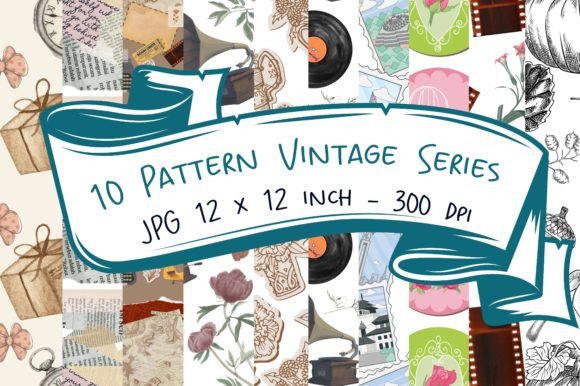
The Vintage Series is a curated collection of digital paper patterns designed to evoke the tactile charm and visual nuance of mid-20th-century print aesthetics—think subtle halftone textures, soft grain overlays, faded ink tones, and restrained floral or geometric motifs rooted in historical design sensibilities. Unlike mass-produced “vintage-style” assets that rely on heavy filters or generic distressed effects, the Vintage Series prioritizes authenticity through deliberate composition, period-appropriate color palettes (often limited to muted ochres, slate blues, cream bases, and charcoal greys), and intentional imperfections—like gentle paper warp, slight registration variation, or faint watermarking—that suggest physical origin without overwhelming legibility or versatility.
What Sets Vintage Series Apart from Other Digital Pattern Collections
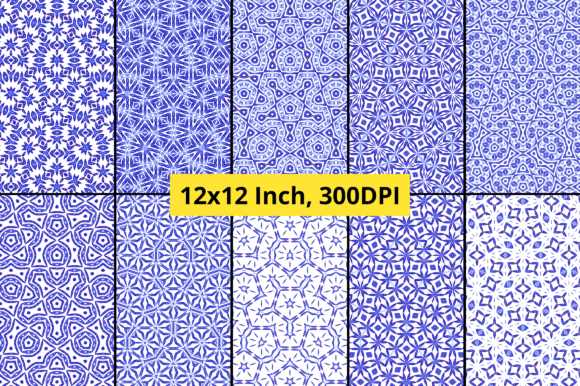
Many digital pattern libraries lean into either maximalist nostalgia—oversaturated sepia, aggressive grunge layers, or cartoonish retro fonts—or minimal abstraction, where “vintage” becomes indistinguishable from generic neutral texture. The Vintage Series occupies a narrower, more considered middle ground. Its 10 included patterns are not variations on a single theme but distinct interpretations: one mimics pressed linen bookcloth, another echoes 1940s wallpaper sampling, a third recalls hand-stamped stationery from early American letterpress studios. Each was developed with reproducibility and layering in mind—meaning they scale cleanly, tile seamlessly at 12×12 inches, and retain clarity when printed at 300 dpi or resized for small-format applications like nail wraps or bottle caps.
This attention to functional detail makes the Vintage Series especially useful for designers who need consistency across multiple output formats. For example, a wedding invitation suite using one of these patterns will translate reliably to digital RSVP cards (with crisp anti-aliased edges), foil-stamped envelopes (thanks to clean vector-ready contrast), and even laser-cut acrylic place cards (where subtle tonal gradation avoids unintended burn-through). That cross-medium reliability isn’t guaranteed with pattern sets built primarily for screen use or optimized only for large-scale wall prints.
Where Vintage Series Fits in Your Creative Workflow
Each of the 10 high-resolution JPG files measures 3600 × 3600 pixels—ideal for full-bleed 12×12 inch layouts, but also flexible enough for adaptation. You can crop sections for social media banners, extract motifs for repeat swatches in textile design software, or overlay them at low opacity behind typography to add depth without sacrificing readability. Because they’re delivered as flat JPGs—not layered PSDs or editable vectors—they load quickly, open in nearly any image editor or desktop publishing tool, and require no special plugins or licenses to use commercially.
This format choice reflects a practical tradeoff: while layered files offer more granular control over individual elements (e.g., adjusting just the ink bleed layer), the JPG format ensures immediate usability across platforms—from Canva and Cricut Design Space to Adobe InDesign and Procreate. It also eliminates compatibility issues that sometimes arise with font dependencies or missing smart object links in complex project files.
Realistic Use Cases and Practical Limitations
Consider how the Vintage Series performs in common applications:
- Invitations & Stationery: Works exceptionally well for letterpress-inspired designs, especially when paired with serif typefaces and blind debossing effects. Less ideal for ultra-modern minimalist invites relying on stark white space—some patterns include enough texture to reduce negative-space impact.
- T-Shirts & Apparel: Prints cleanly on cotton and poly-blend fabrics using standard DTG or screen printing. Avoid patterns with fine halftone dots if printing on textured jersey knits, as dot gain may blur detail.
- Cell Phone Covers & Small-Scale Products: Scales down effectively due to high base resolution. However, avoid centering intricate details (like tight scrollwork) directly over camera cutouts or button placements—test mockups first.
- Nail Wraps & Jewelry Backings: Performs well when isolated motifs are extracted and resized. Full-pattern coverage on tiny surfaces (e.g., 10mm pendant backs) may lose legibility unless simplified manually.
- Website Backgrounds & UI Elements: Best used sparingly—as section dividers, hover states, or subtle overlay textures—not as full-page backgrounds, where repetition can cause visual fatigue.
One limitation worth noting: because the Vintage Series emphasizes analog fidelity, it doesn’t include editable color variants. If you need the same pattern in six different palettes, you’ll adjust hues manually in your editing software rather than selecting pre-made options. This supports flexibility (you control saturation, brightness, and CMYK conversion precisely) but adds a step for time-sensitive projects.
Comparing Vintage Series With Other Approaches
When evaluating resources for vintage-inspired design work, consider three broad categories: curated digital paper collections, custom illustration services, and free or subscription-based asset libraries.
A curated set like the Vintage Series offers balance—it’s more cohesive and historically grounded than most subscription libraries, yet more accessible and affordable than commissioning original illustrations. Subscription services often provide broader volume (hundreds of patterns) but less thematic consistency; their “vintage” tags may cover everything from Victorian etchings to 1980s Memphis design, making visual harmony harder to achieve across a single project. Custom illustration delivers unmatched specificity but requires budget, timeline, and clear creative direction—making it better suited for brand-defining launches than iterative craft experiments.
The Vintage Series fits best when you need reliable, stylistically unified assets for medium-complexity projects—say, launching an artisanal candle line with coordinated labels, website graphics, and Instagram templates—without committing to bespoke development or sifting through thousands of loosely tagged files.
When Vintage Series Is the Right Choice—and When It Might Not Be
Choose the Vintage Series if you value:
- Consistent tone and restraint over trend-driven eclecticism;
- High-resolution, print-ready files with no licensing ambiguity;
- Patterns engineered for both digital and physical output;
- A starting point that invites refinement—not rigid templates that limit interpretation.
It may be less suitable if you need:
- SVG or vector versions for cutting machines requiring path-based precision;
- Broad stylistic variety within a single purchase (e.g., pairing Art Deco with Shaker or Bauhaus motifs);
- Animated or interactive versions for web use;
- Pre-built templates (e.g., Canva invitation layouts) rather than raw pattern files.
For educators, hobbyists, or small-business owners testing visual direction before scaling production, the Vintage Series provides enough structure to accelerate early-stage design decisions while leaving room for personalization. It’s neither a shortcut nor a final answer—but a thoughtful, well-executed foundation.
Getting Started With the Files
The ZIP file contains 10 JPGs—no installers, no accounts, no watermarks. Open any file in your preferred editor, adjust levels or hue/saturation as needed for your substrate (e.g., warm up tones slightly for kraft paper printing), and begin experimenting. Try overlaying two patterns at different opacities to build depth, or use selection tools to isolate and repeat a single motif for borders or monograms. Because each is 12×12 inches at 300 dpi, they integrate smoothly into standard scrapbooking software, print-on-demand platforms, and professional packaging workflows alike.
If you’re comparing options for an upcoming project, ask yourself: Do I need cohesion across formats? Am I balancing authenticity with adaptability? Is speed-to-output more critical than infinite customization? The Vintage Series answers those questions with quiet consistency—not flash, but function rooted in design history.