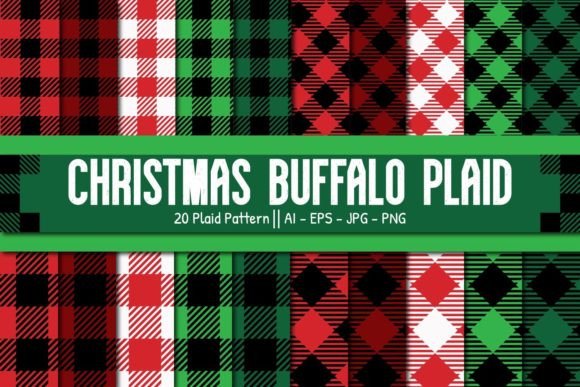
Christmas Fantasy 204: A Digital Paper Designed for Real Creative Work
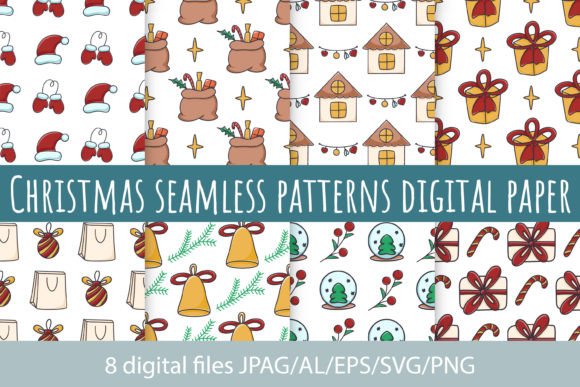
Christmas Fantasy 204 isn’t just another holiday-themed digital download—it’s a high-resolution, purpose-built resource crafted for professionals and makers who need reliability, versatility, and visual cohesion across physical and digital outputs. At its core, it’s a 12 × 12 inch (30.5 × 30.5 cm) JPG file delivered at 300 dpi—optimized for print without compromise, yet flexible enough to scale gracefully for web banners, social media assets, or UI overlays. Unlike low-res clipart or generic stock patterns, Christmas Fantasy 204 balances nostalgic warmth with contemporary design sensibility: think subtle metallic accents, layered botanical motifs, and balanced negative space—not overcrowded ornamentation.
Why This Format Matters Now More Than Ever
Creative workflows have shifted toward hybrid output. A small business owner might design holiday cards in Canva, then send the same asset to a local printer for premium stationery—and later repurpose a cropped section as an Instagram story background. Educators create printable classroom decorations one day and adapt them into digital lesson slides the next. Bloggers use consistent visual language across newsletters, blog headers, and Pinterest pins. Christmas Fantasy 204 supports that continuity: its 300 dpi resolution ensures crisp printing on cardstock, photo paper, or fabric transfers, while its JPEG format guarantees compatibility with nearly every design tool—from Adobe Photoshop and Affinity Designer to free platforms like Photopea or even Microsoft Word’s background tools.
This responsiveness reflects broader shifts in how people approach seasonal creativity. There’s less tolerance for “good enough” assets. Users expect seamless transitions between screen and print, between personal projects and client deliverables. They’re also more aware of licensing clarity and technical constraints—no one wants to discover mid-print that their “high-res” file is actually 72 dpi stretched to fill a poster.
From Scrapbooking Tables to Digital-First Studios
Historically, digital paper emerged from the scrapbooking community—where crafters needed printable, repeatable patterns that mimicked textured cardstock or vintage wrapping paper. Christmas Fantasy 204 honors that origin but extends far beyond it. Its 12 × 12 inch canvas was originally standardized for physical scrapbook layouts, but today, that same size functions as a modular base for numerous applications:
- Stationery & Invitations: Crop sections for elegant monogrammed letterheads or layer under transparent text for foil-effect digital invites.
- Blog & Social Banners: Use full-size or scaled versions as cohesive header backgrounds—especially effective when paired with consistent typography and color palettes across platforms.
- Book & CD Covers: The resolution and aspect ratio align cleanly with common publishing standards; minor cropping or safe-zone adjustments are usually all that’s needed for KDP, IngramSpark, or Bandcamp uploads.
- Fashion & Textile Design: Though not a seamless tile by default, designers can isolate motifs (like holly sprigs or geometric snowflakes) and rework them into repeat patterns for fabric printing or embroidery digitizing.
- Educational Materials: Teachers integrate elements into worksheets, holiday-themed quizzes, or classroom door displays—both printed and projected.
What makes this practical isn’t just breadth of use—it’s predictability. Because it’s delivered as a single, well-named JPG file—not a ZIP of mismatched PNGs or vector files requiring software most hobbyists don’t own—it lowers the barrier to entry without sacrificing quality.
How It Fits Into Modern Creative Expectations
Today’s creators prioritize efficiency without compromising aesthetic integrity. They’re less likely to spend hours building custom patterns from scratch and more likely to seek trusted, ready-to-use assets that still feel distinctive. Christmas Fantasy 204 meets that need by offering a curated visual language—not generic red-and-green clichés, but thoughtful compositions with depth, texture, and tonal variation. That matters when standing out in crowded digital spaces: a newsletter banner using this paper feels intentional, not templated.
It also responds to growing demand for ethical, sustainable creative practices. Printing at home or through local print shops reduces reliance on mass-produced, overseas-sourced decor. Using a single high-quality digital file across multiple projects minimizes redundant downloads, storage bloat, and version confusion—small efficiencies that compound over time for freelancers managing dozens of client assets.
Real-World Applications You Might Not Expect
While greeting cards and scrapbooks remain obvious uses, newer applications reveal how adaptable Christmas Fantasy 204 truly is:
- Video Game UI Elements: Indie developers use sections of the pattern as subtle background textures for holiday-themed menu screens or loading interfaces—its resolution holds up well even when blurred or overlaid with semi-transparent UI layers.
- Podcast Cover Art: When combined with bold typography and a clear focal point, the background adds seasonal context without competing for attention—a smart alternative to photorealistic holiday scenes that often look dated within months.
- Custom Packaging Design: Small-batch makers apply cropped or mirrored segments to product labels, gift tags, or mailer boxes—giving handmade goods a polished, cohesive brand presence.
- Virtual Event Backdrops: Zoom or Teams users extract a centered portion and set it as a virtual background—soft focus settings make the detail rich but not distracting during video calls.
None of these require advanced skills—just basic image editing knowledge (crop, resize, adjust opacity) and an understanding of where visual weight should sit in a composition.
Choosing Quality Over Quantity in Seasonal Design
The market is saturated with “Christmas digital papers”—but many lack technical rigor. Some are upscaled from web graphics, others include embedded watermarks, and many offer no guidance on recommended use cases or color profiles. Christmas Fantasy 204 avoids those pitfalls: it ships as a clean, RGB JPG (ideal for screen use and most consumer printers), includes no hidden layers or restrictions, and is sized to match industry-standard print dimensions.
That attention to detail signals respect for the user’s time and intent. A freelance graphic designer pitching holiday branding to a boutique retailer doesn’t need to troubleshoot resolution mismatches—they need confidence that what they present will translate accurately from mockup to final output. Likewise, a parent organizing a school craft fair appreciates knowing the file will print clearly on a standard inkjet without needing color calibration expertise.
Looking Ahead: What Makes This Resource Future-Ready?
Design trends evolve, but foundational needs don’t: clarity, consistency, and compatibility endure. Christmas Fantasy 204 anticipates longer-term utility—not by chasing fleeting aesthetics, but by anchoring itself in enduring production standards. Its 300 dpi resolution remains the benchmark for professional print. Its 12 × 12 inch canvas continues to be supported across desktop publishing, cutting machines (like Cricut Design Space), and layout tools. And its JPG format ensures accessibility across devices and operating systems—no plugin required, no compatibility warnings.
As AI-assisted design tools become more common, having a reliable, human-curated starting point becomes even more valuable. Generative tools excel at variation and iteration—but they still rely on strong source material. Christmas Fantasy 204 serves as that anchor: a thoughtfully composed, technically sound foundation you can enhance, reinterpret, or build upon—not replace.
Ultimately, Christmas Fantasy 204 works because it assumes competence in its users. It doesn’t talk down to hobbyists, nor does it overpromise to agencies. It delivers exactly what it states—no more, no less—and trusts creators to decide how best to apply it. In a landscape increasingly shaped by speed, scalability, and cross-platform fluency, that kind of quiet reliability is rare—and deeply useful.