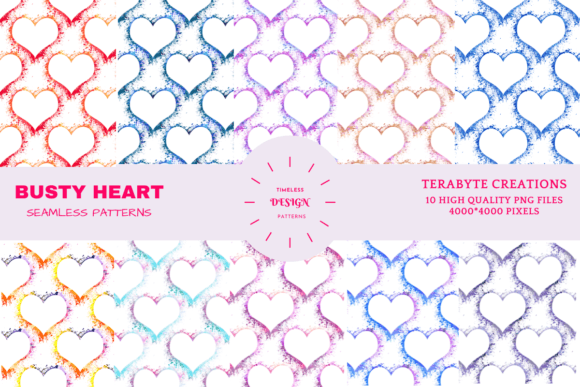
Wavy Heart Pattern: Seamless Design for Natural Elegance and Versatile Creativity
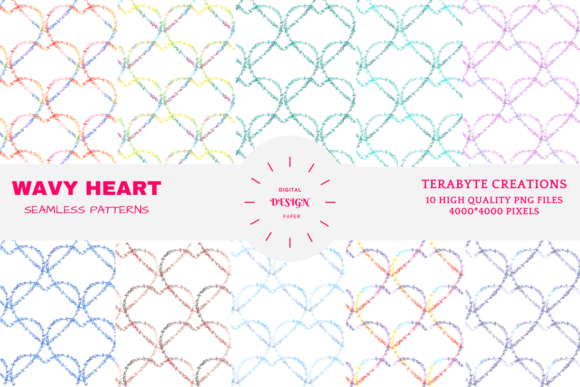
A Wavy Heart Pattern isn’t just another decorative motif—it’s a thoughtful fusion of organic rhythm and emotional resonance. Unlike rigid geometric repeats or overly literal heart icons, this design uses soft, flowing curves that echo natural movement: ocean swells, wind-swept grasses, or the gentle rise and fall of breath. That subtle undulation gives it warmth and motion—making it ideal for people who appreciate fine design *and* authenticity. Whether you’re crafting wedding stationery with quiet sophistication or designing sustainable packaging for a botanical skincare line, the wavy heart seamless pattern bridges sentiment and surface with quiet confidence.
Why This Pattern Stands Out (Beyond the Obvious)
Many assume “heart” patterns are only for Valentine’s Day or romance-themed projects. That’s a common oversight—and it limits creative potential. A well-designed Wavy Heart Pattern works because it’s emotionally evocative *without* being prescriptive. Its fluid lines soften symbolism, letting context—not cliché—define meaning. It reads as nurturing in baby apparel, refined in boutique branding, and earthy in handmade paper goods. The key is intentionality: it supports your message rather than shouting over it.
What People Often Overlook Before Downloading
Even experienced designers sometimes skip critical checks before using a seamless pattern like this one—especially when excitement about aesthetics overrides technical awareness. Here’s what matters most:
- Resolution & scalability: At 4000 × 4000 pixels, this Wavy Heart Pattern scales beautifully for large-format prints (think wall murals or fabric bolts), but only if used correctly. Resizing up beyond native dimensions in low-DPI environments can blur those delicate curves—ruining the very softness that makes the design special.
- Seamless integrity: Not all “seamless” patterns behave the same way across surfaces. Some repeat with visible alignment gaps on curved objects (like mugs or tote bags) or shift unpredictably in textile layout software. Always test the tile in your intended workflow—even a quick mockup in Photoshop or Illustrator saves time later.
- Color mode & compatibility: These JPG files are RGB-optimized for digital use and vibrant screen display. If you’re printing professionally (especially for packaging or stationery), confirm whether your printer prefers CMYK. Converting without proper color profiling may mute the subtle tonal shifts that give the wavy heart its depth.
Real Mistakes—and Smarter Alternatives
Mistake: Assuming “instant download” means “ready-to-print in any context.”
Reality: Instant access is convenient—but preparation still matters. One freelance stationer bought a similar pattern for wedding invites, printed directly from the JPG at 300 DPI, and discovered faint tiling artifacts along fold lines. Why? She hadn’t checked the repeat unit size against her card dimensions. A 12×12 inch card needed precise alignment to avoid splitting the wave mid-curve.
Better approach: Open the file in your design tool and create a test tile grid (e.g., 3×3 repeats). Zoom in at 200% and trace the seam edges with a guide layer. If lines flow uninterrupted, you’re good. If not, adjust scale slightly—or contact the designer for a version optimized for your specific output size.
Mistake: Using the pattern across multiple projects without considering brand consistency.
Reality: A beautiful Wavy Heart Pattern can unify visual language—but only if applied with restraint. One small business owner used it on everything: email headers, product labels, social banners, *and* employee notebooks. Without variation in scale, opacity, or placement, it began to feel repetitive—not cohesive.
Better approach: Treat the pattern like a signature ingredient—not the whole recipe. Use full-scale repeats for background textures (e.g., cushion covers), reduce opacity and overlay on photography for web headers, or isolate a single wave-and-heart unit as a subtle watermark on invoices. Variation builds recognition; repetition risks fatigue.
Practical Prep Before You Create
You don’t need advanced software to get great results—but a few minutes of prep prevents avoidable hiccups:
- Verify your unzip tool: As noted, these files come in a ZIP folder. While Windows and macOS have built-in extractors, they occasionally struggle with large archives or nested folders. Tools like 7-Zip (free, open-source) or PeaZip handle high-res assets reliably—and let you preview contents before extraction.
- Check naming conventions: Look for clear, consistent filenames (e.g., WavyHeart_NaturalBeige_4000x4000.jpg). Ambiguous names like “Pattern1_final_v3.jpg” make version control harder—especially when managing multiple clients or seasonal collections.
- Test print a small swatch: Before committing to yardage or bulk stationery, print a 4×4 inch sample on your target paper stock. Texture, sheen, and absorption affect how those soft waves translate—matte recycled paper may mute contrast, while glossy finishes enhance definition.
Where This Pattern Truly Shines
This Wavy Heart Pattern excels where intention meets tactility. Think:
– Linen napkins for a farm-to-table wedding, where the wave echoes rolling hills and the heart nods to hospitality.
– Soft-touch business cards for a holistic wellness coach—subtle, grounded, memorable.
– Reusable produce bags printed with the pattern in muted sage and clay tones—functional, beautiful, quietly meaningful.
It’s not about hearts as decoration. It’s about rhythm as resonance.
Final Thought: Design Is Dialogue
A Wavy Heart Pattern doesn’t exist in isolation. It responds to light, surface, scale, and story. Choosing it thoughtfully—checking resolution, testing seams, honoring context—is how you turn a digital asset into something that feels handmade, human, and wholly yours. Whether you’re launching a new brand or finishing a weekend DIY project, let the wave guide your choices—not just the heart.