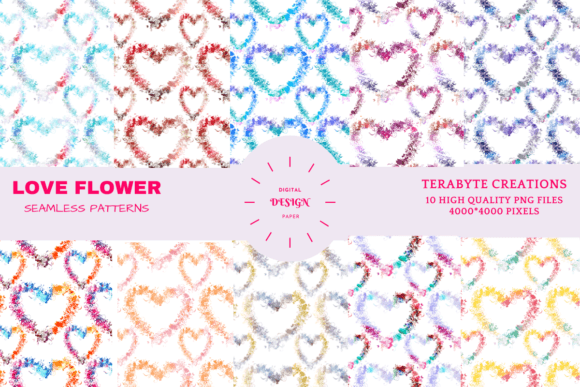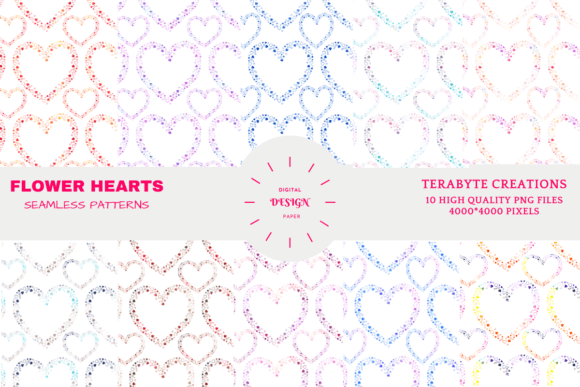
Flower Hearts Pattern
A Flower Hearts Pattern blends botanical charm with tender symbolism—delicate blossoms intertwined with soft, stylized hearts in a seamless repeat. It’s not just decorative; it’s emotionally resonant. People drawn to natural textures, romantic aesthetics, or refined minimalism often choose this pattern for its balance: organic yet intentional, gentle yet versatile. Whether you're designing wedding stationery with quiet elegance, branding a small-batch herbal tea line, or printing custom fabric for a boutique clothing collection, the Flower Hearts Pattern offers warmth without clutter and detail without distraction.
What Many Overlook Before Downloading
One of the most common oversights is assuming resolution alone guarantees usability. Yes—this pattern delivers crisp 4000×4000 pixel JPG files—but resolution isn’t everything. A high-res file won’t save you if the repeat isn’t truly seamless across edges. Some designers mistakenly assume “seamless” means “visually similar at borders.” In reality, true seamlessness requires precise alignment of motifs so that tile edges match *mathematically*, not just aesthetically. Without that precision, you’ll see visible lines or misaligned petals when tiling across fabric, wallpaper, or large-format prints.
Another frequent misstep? Skipping the test print. Even with perfect tiling, color rendering varies across devices and printers. What looks soft rose on your screen may shift toward dusty mauve on uncoated paper—or wash out entirely on cotton fabric. Always sample a small section first, especially if using the pattern for client-facing work like invitations or packaging.
Why File Type Matters More Than You Think
JPG is widely compatible—but it has limits. It doesn’t support transparency. If you plan to layer the Flower Hearts Pattern over photos, textured backgrounds, or gradient overlays (common in digital marketing assets or app UIs), you’ll need a PNG version with alpha channel transparency. Since this listing only includes JPGs, consider whether your use case demands flexibility beyond flat-color backgrounds.
Also, note: these are raster files—not vector-based. That means scaling up beyond 4000 pixels risks pixelation. For signage, large wall murals, or embroidery digitizing, vector conversion may be necessary later. If scalability is critical to your project, factor in time (or budget) for professional vectorization—don’t assume the JPG will stretch cleanly to billboard size.
Choosing the Right Pattern for Your Medium
Not all surfaces respond the same way to intricate repeats. On tightly woven linen or structured cotton, fine-line floral hearts hold beautifully. But on stretchy knits or fuzzy fleece, delicate details can blur or disappear. Similarly, embossed stationery or foil-stamped invites may flatten subtle gradients in the design—so review motif density and contrast before committing.
For packaging, check spacing between repeated elements. Too-tight repeats can create visual vibration; too-sparse ones feel disconnected. This Flower Hearts Pattern strikes a balanced rhythm—moderate scale, clear breathing room between motifs—which makes it adaptable across boxes, labels, and tissue paper without needing heavy editing.
Download & Setup: Avoid These Pitfalls
You’ll receive a ZIP folder—no physical item, no shipping. But many users hit a snag right after purchase: they can’t open the archive. While the description lists unzip tools like 7-Zip or PeaZip, some assume their default Windows Explorer will handle it. It often won’t—especially with password-protected or multi-layered archives. Don’t wait until deadline day to discover your system lacks extraction capability.
Pro tip: Download one of the recommended free tools *before* purchasing. Test it with a sample ZIP. Also, avoid extracting files directly to cloud-synced folders (like Dropbox or OneDrive) unless you’ve confirmed stable internet and local cache settings—interrupted syncs can corrupt large image files silently.
Using the Pattern Across Real Projects
Think beyond “just pretty.” This design shines where intention meets application:
- Branding: Use a cropped section as a watermark or social media accent—soft enough to recede, distinctive enough to reinforce identity.
- Clothing: Scale down slightly for pocket linings or cuffs; enlarge for full-skirt repeats. The heart-floral duality appeals broadly—neither overly girlish nor generically botanical.
- Wedding Stationery: Print on ivory cotton paper with matte lamination to enhance texture. Avoid glossy finishes—they mute the organic feel.
- Home Decor: Works exceptionally well on duvet covers and ceramic mug wraps because the repeat flows naturally with human-scale objects—not too busy, not too sparse.
Before You Hit “Buy”: Quick Checklist
Ask yourself these questions—not as hurdles, but as clarity-builders:
- Is my intended surface compatible with JPG-only, non-transparent files? (e.g., Are you planning to overlay on photography? If yes, consider alternate sourcing.)
- Do I have reliable archive extraction software installed and tested?
- Will my final output size stay within or near the 4000px native resolution? (If scaling beyond 200%, explore vector options early.)
- Have I reviewed at least one real-world mockup? (Many sellers provide free PSD templates—download and test the pattern there before investing time in layout.)
- Does the color palette align with my brand or project mood? (This pattern leans warm and muted—not neon-bright or high-contrast. If you need bold saturation, adjust in post or seek alternatives.)
The Flower Hearts Pattern stands out because it bridges emotion and utility. It’s not merely “cute” or “trendy”—it’s thoughtfully constructed for real creative work. When chosen with awareness—not just attraction—you’ll find it supports your vision instead of competing with it. Whether you’re hand-lettering a set of baby shower invites or developing a capsule collection for your Etsy shop, let the pattern serve your message, not distract from it. And remember: the best design decisions start not with how something looks, but with how it functions in your hands, on your tools, and in your next project.